
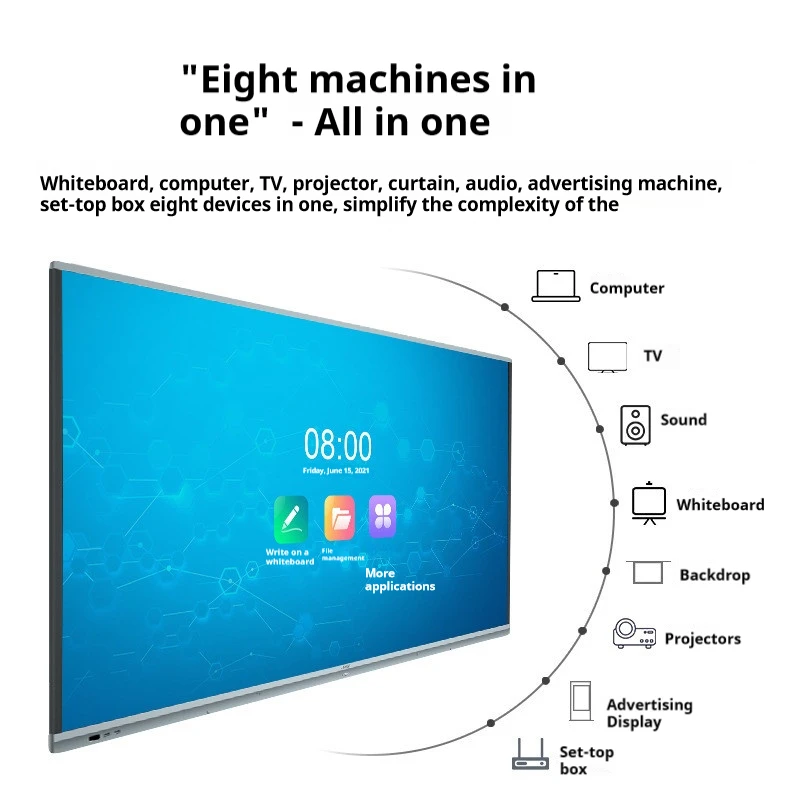
1.What Is a Smart Board?
Smart Boards are advanced, touch-sensitive devices that combine the functionality of traditional whiteboards with digital technology. These interactive boards are widely used in both educational and corporate environments due to their ability to enhance presentations, improve collaboration, and engage users in real-time.
How Smart Boards Work
Smart Boards operate through a touch-sensitive surface that detects input from fingers or styluses. They connect to a computer and allow users to control software, write, draw, and interact with content directly on the screen. Integrated with various software platforms, Smart Boards enable seamless sharing and saving of digital notes.
Types of Smart Boards
- Interactive Whiteboards: Utilize projectors to display content on a touch-sensitive surface, ideal for classrooms.
- Touchscreen Smart Boards: Feature built-in displays with high resolution, perfect for professional settings.
- Projection-Based Smart Boards: Combine projectors with interactive surfaces, suitable for large venues.
Benefits of Smart Boards
- Enhanced Learning: Smart Boards integrate multimedia, making lessons more interactive and engaging for students.
- Business Collaboration: In corporate settings, they streamline meetings by allowing real-time collaboration and note-sharing.
- Accessibility: Designed with features that accommodate users with disabilities, ensuring inclusivity.
Future Trends
The future of Smart Boards includes AI integration, improved IoT capabilities, and advancements in display technology, making them even more powerful and versatile.
In summary, Smart Boards are transforming how we learn and work by offering dynamic, interactive experiences that bridge the gap between traditional methods and digital innovation.
2.How much is a smart board?
When considering investing in a Smart Board, understanding the costs involved is crucial. Prices for Smart Boards can vary significantly based on factors such as size, features, brand, and additional accessories. In this guide, we will break down the key elements that influence Smart Board pricing, helping you make an informed decision.
Basic Smart Board Models
The cost of entry-level Smart Boards typically ranges between $1,000 and $2,000. These models are usually smaller in size, around 55 to 65 inches, and come with standard features such as touch interactivity and basic software packages. They are ideal for smaller classrooms or meeting rooms where advanced features are not required.
Mid-Range Smart Boards
For those seeking more advanced functionality, mid-range Smart Boards are available in the $2,000 to $4,000 price range. These boards often feature larger screens (up to 75 inches), multi-touch capabilities, and enhanced software options. They offer better image quality and are well-suited for larger classrooms, corporate settings, and more dynamic presentations.
High-End Smart Boards
High-end Smart Boards, which can cost $5,000 or more, offer premium features and are designed for professional environments where top-tier performance is essential. These models typically include ultra-high-definition displays, advanced multi-touch capabilities, integrated cameras, and robust software suites. Sizes can exceed 80 inches, making them ideal for large conference rooms or auditoriums.
Additional Costs to Consider
Beyond the initial purchase price, several additional costs may arise when investing in a Smart Board:
- Software Licenses: Some Smart Boards require ongoing software subscriptions, which can add several hundred dollars annually.
- Installation: Professional installation services can cost anywhere from $200 to $500, depending on the complexity.
- Maintenance and Support: Extended warranties and technical support packages may also add to the overall cost.
Cost-Effective Alternatives
For those on a tighter budget, refurbished Smart Boards or older models may offer a more affordable option. Additionally, interactive projectors can serve as a cost-effective alternative to Smart Boards, providing similar functionality at a lower price point.
Is a Smart Board Worth the Investment?
The value of a Smart Board extends beyond its price tag. For educational institutions, the ability to create interactive and engaging lessons can significantly enhance the learning experience. In corporate settings, the improved collaboration and productivity can justify the investment. When considering the cost, it’s essential to weigh these benefits against the financial outlay.
Conclusion
The cost of a Smart Board can range from $1,000 to over $5,000, depending on the model and features. While the initial investment may seem substantial, the long-term benefits in terms of enhanced learning, improved collaboration, and increased productivity make it a worthwhile consideration for many educational and business environments.
3.What is a smart board interactive whiteboard?
A Smart Board interactive whiteboard is a cutting-edge technology tool that combines the functionality of a traditional whiteboard with the power of a computer, creating an interactive and engaging experience for users. Widely used in educational and corporate environments, Smart Boards are transforming how we teach, learn, and collaborate.
How Does a Smart Board Work?
A Smart Board interactive whiteboard operates through a touch-sensitive surface that responds to input from fingers, styluses, or other tools. It is typically connected to a computer and a projector or has a built-in display. The computer’s desktop is projected onto the Smart Board’s surface, allowing users to control applications, write notes, draw diagrams, and interact with content directly on the board.
Key Features of Smart Board Interactive Whiteboards
- Touch Interactivity: The core feature of a Smart Board is its touch-sensitive surface, which supports both single and multi-touch gestures. This allows multiple users to interact with the board simultaneously, making it ideal for collaborative activities.
- Digital Ink: Users can write on the board using a stylus or their finger, and the digital ink can be saved and shared electronically. This feature is particularly useful for educators who want to capture and distribute lesson notes.
- Integrated Software: Smart Boards come with specialized software designed to enhance their functionality. This software includes tools for creating interactive lessons, annotating presentations, and accessing a wide range of multimedia content.
- Connectivity Options: Smart Boards can connect to various devices, such as computers, tablets, and smartphones, via HDMI, USB, or wireless connections. This versatility allows for seamless integration with existing technology infrastructures.
Benefits of Using a Smart Board Interactive Whiteboard
- Enhanced Learning Experience: In classrooms, Smart Boards make lessons more engaging by integrating multimedia elements such as videos, images, and interactive simulations. This approach caters to different learning styles and helps students grasp complex concepts more easily.
- Improved Collaboration: In corporate settings, Smart Boards facilitate real-time collaboration by allowing team members to work together on documents, presentations, and brainstorming sessions. The ability to save and share notes instantly streamlines communication and boosts productivity.
- Accessibility: Smart Boards are designed with accessibility features that accommodate users with disabilities. This ensures that everyone, regardless of physical ability, can benefit from the technology.
Applications of Smart Board Interactive Whiteboards
- Education: Smart Boards are widely used in classrooms to create interactive and dynamic learning environments. Teachers can develop engaging lessons that encourage student participation and foster a deeper understanding of the material.
- Business: In the corporate world, Smart Boards are used for presentations, training sessions, and collaborative projects. Their ability to integrate with various software platforms makes them a versatile tool for improving communication and decision-making processes.
Conclusion
A Smart Board interactive whiteboard is a powerful tool that brings together the best of traditional and digital technologies. By offering touch interactivity, digital ink, and robust software integration, Smart Boards enhance learning and collaboration across various sectors. Whether in a classroom or a boardroom, a Smart Board transforms the way we interact with information, making it an invaluable asset in today’s digital age.
4.How do i use a smart board?
Using a Smart Board can significantly enhance your presentations, lessons, and collaborative sessions by offering interactive features that go beyond traditional whiteboards. Whether you’re in a classroom or a corporate setting, learning how to use a Smart Board effectively can make your work more engaging and efficient. This guide will walk you through the essential steps to get started.
1. Setting Up the Smart Board
Before you begin using the Smart Board, ensure that all necessary components are correctly connected:
- Connect the Smart Board to a Computer: Most Smart Boards require a connection to a computer. Use the appropriate cables (USB, HDMI, or wireless) to link the Smart Board to your device.
- Turn On the Projector or Display: If your Smart Board uses an external projector, turn it on and ensure that the computer’s screen is projected onto the board. For models with built-in displays, power on the board directly.
- Calibrate the Board (if necessary): Calibration ensures that the touch inputs on the board align correctly with the projected image. Follow the on-screen instructions to complete the calibration process.
2. Navigating the Interface
Once your Smart Board is set up, you can start interacting with it:
- Touch Control: Use your finger or a stylus to navigate the board. You can open applications, browse the internet, or interact with digital content by touching the screen.
- Digital Ink: Select the pen tool to write or draw on the board. Digital ink allows you to annotate presentations, highlight key points, or make notes directly on the displayed content.
- Eraser Tool: To erase mistakes or unwanted marks, use the eraser tool by selecting it from the toolbar or by using the back of the stylus (if equipped).
3. Using Smart Board Software
Most Smart Boards come with integrated software that enhances their functionality:
- Open the Software: Launch the Smart Board software, which may include tools like Smart Notebook, for creating interactive lessons or presentations.
- Create Interactive Content: Use the software to add images, videos, and interactive elements to your presentations. You can save and share these files for later use.
- Save and Share Notes: After a session, save your notes directly to your computer or cloud storage. This allows you to review or distribute the content to others.
4. Incorporating Multimedia
One of the strengths of a Smart Board is its ability to integrate multimedia:
- Play Videos: Embed or stream videos directly onto the board to enhance your presentation. Use the touch interface to pause, play, or navigate through the video.
- Display Images and Diagrams: Easily insert images, diagrams, or charts to support your content, making your presentations more visually engaging.
5. Collaborating with Others
Smart Boards are ideal for collaborative work:
- Multi-Touch Interaction: Most Smart Boards support multi-touch, allowing multiple users to interact with the board simultaneously. This feature is particularly useful for group activities and brainstorming sessions.
- Real-Time Editing: Work on documents, spreadsheets, or presentations in real-time, with all changes displayed instantly on the board.
Conclusion
Using a Smart Board effectively involves more than just touching the screen—it’s about leveraging the technology to create interactive, engaging, and efficient presentations or lessons. By mastering the setup, navigation, software, multimedia integration, and collaboration features, you can fully utilize the potential of a Smart Board in any environment.