
Lynnhan – Trusted Supplier | LED/OLED/LCD/E-paper digital signages
Lynnhan – Trusted Supplier | LED/OLED/LCD/E-paper digital signages
Lynnhan – Trusted Supplier | LED/OLED/LCD/E-paper digital signages
Lynnhan – Trusted Supplier | LED/OLED/LCD/E-paper digital signages
LED Display Market Hits $102B: Trends & Future Insights
How LED Displays Are Shaping the Future of Display Technology
From outdoor advertising to virtual production, from stadiums to home theaters—China’s LED display industry is redefining the global display technology landscape. In 2024, the global LED display market crossed the $102 billion mark, growing at an impressive rate. Driven by advancements in Mini LED and Micro LED technologies, the industry is positioned as a key player in next-generation display solutions. But with rising competition and evolving application demands, how can LED display manufacturers solidify their market dominance and lead the future?
LED Display Market Booms: 23% YoY Growth in 2024
According to industry research, the global LED display market reached $102 billion in 2024, marking a 23% year-over-year growth. The total shipment area exceeded 7.8 million square meters, growing 19.5% YoY, outpacing traditional display technologies such as LCD and OLED.
Key Market Highlights:
✅ Small-Pitch LED (≤P2.5) dominated with a 48% revenue share, becoming the industry’s growth engine.
✅ Micro LED, despite being in the early commercialization stage, achieved a 60%+ CAGR, showing immense future potential.
✅ Regional Insights:
- Asia-Pacific led with 45% of the global market share, with China contributing over 60%.
- North America & Europe saw over 20% growth, driven by increasing demand for sports events and commercial advertising.
✅ Price Trends: - Small-pitch LED prices dropped by 8% to $3,200 per square meter.
- Micro LED remains premium, priced at $12,000 per square meter due to high production costs.
- However, demand for ultra-HD, high-contrast displays is surging, pushing premium product sales to 35% of the market.
Emerging Innovations: Transparent, Flexible & 3D LED Displays on the Rise
🔹 Transparent LED Displays saw a 42% YoY growth, expanding into retail storefronts and stage designs.
🔹 Flexible LED Displays gained traction in automotive dashboards and wearable tech due to their bendable features.
🔹 Glasses-Free 3D LED is capturing new markets with its immersive visual experiences.
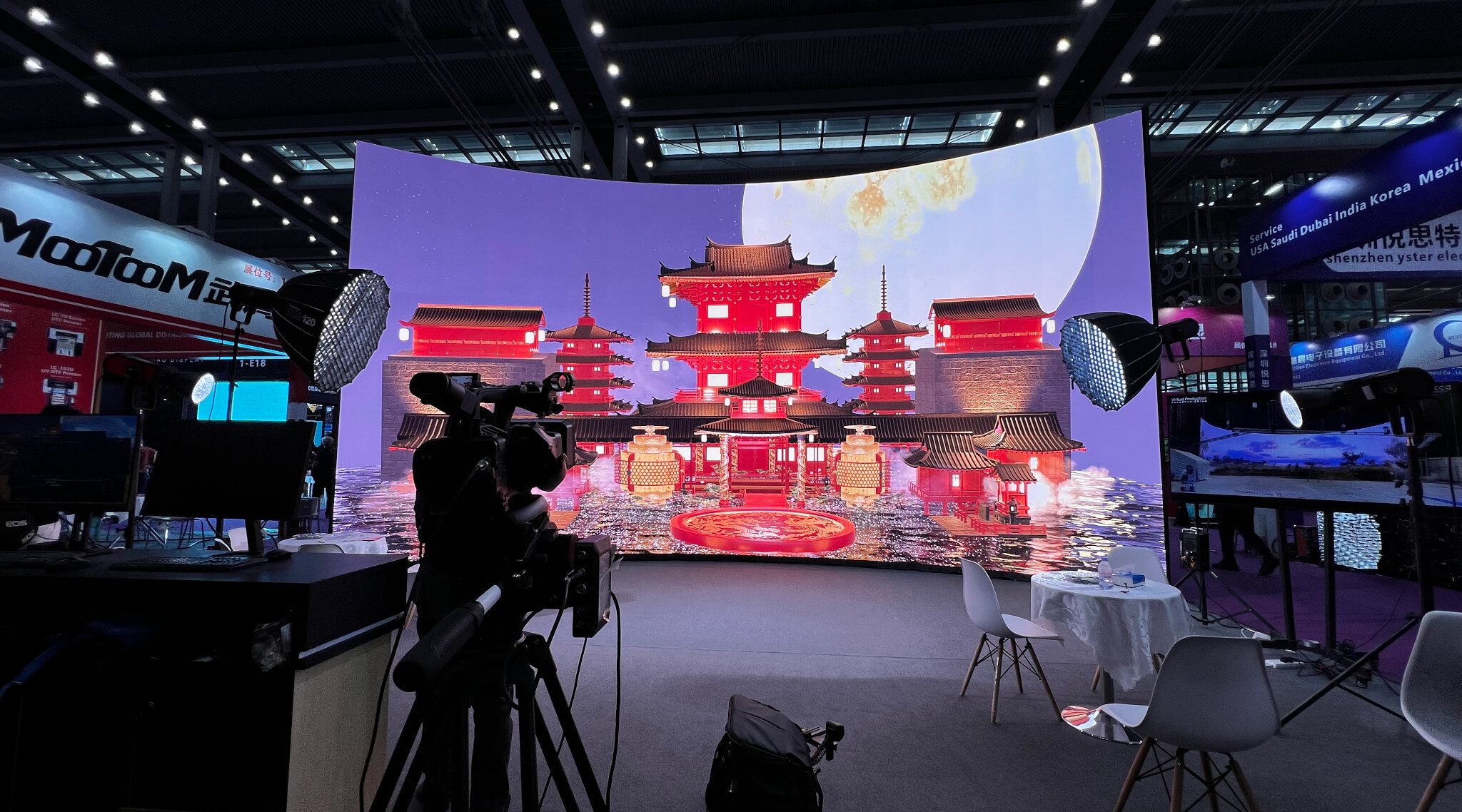
Virtual production is another breakout segment. With Hollywood studios rapidly adopting LED walls for filmmaking, demand surged by 67% in 2024.
These trends indicate that innovation and scenario-driven applications are the key forces shaping the global LED display market. While small-pitch LED is driving mainstream adoption, Micro LED is unlocking new frontiers in ultra-high-resolution displays. Meanwhile, China’s Asia-Pacific supply chain dominance and rising demand in North America and Europe are fueling faster technology iterations.
Technology & Application Expansion: The Two Growth Pillars
The LED display boom is powered by two key drivers: technological breakthroughs and expanding application scenarios.
1️⃣ Mini & Micro LED: Ushering in the “Ultra-HD Era”
✔️ Mini LED backlighting is disrupting the high-end TV and gaming monitor markets with its superior brightness and contrast. In 2024, Mini LED TV shipments exceeded 18 million units, with Samsung and TCL commanding 70%+ market share.
✔️ Micro LED is making significant advancements, overcoming challenges in mass transfer technology. For instance:
- Leyard and Sony introduced a 20-meter-wide Micro LED cinema screen with 16K resolution, achieving a 90% yield rate and 30% cost reduction, accelerating commercialization.
✔️ Quantum Dot LED (QD-LED) is emerging as the next game-changer. BOE’s latest QD-LED panel offers 140% NTSC color gamut coverage and 40% lower power consumption, making it ideal for AR/VR applications.
2️⃣ Expanding Application Scenarios: From Outdoor Ads to Smart Cities & Immersive Entertainment
✔️ Outdoor advertising remains the largest market (38% share), but new application areas are expanding rapidly:
- Virtual Production: Over 500 new LED virtual studios were launched globally in 2024, replacing green screens in film production.
- Smart Cities: High-resolution traffic command displays and smart streetlight screens are driving urban digitalization.
- Example: Shenzhen Qianhai’s “Ultra-HD Traffic Brain” uses 5,000m² LED displays, improving traffic flow analysis by 90%.
- Consumer Electronics: Rollable TVs, transparent smartphones, and home Micro LED displays are gaining market traction.
As LED displays move beyond traditional advertising, they are creating immersive entertainment experiences, enabling smart cities, and revolutionizing filmmaking. The integration of hardware, software, and content ecosystems is giving rise to new digital infrastructure, powering the trillion-dollar digital economy.
Challenges & Opportunities: The Road Ahead for LED Displays
Despite strong market growth, technical bottlenecks and ecosystem gaps still pose challenges:
⚠️ Micro LED faces three key hurdles for mass production:
1️⃣ Mass Transfer Efficiency
2️⃣ Driver IC Design
3️⃣ Full-Color Process Breakthroughs
⚠️ Standardization & Ecosystem Development:
- The China Electronics Standardization Institute introduced the first-ever Micro LED Display Standards, defining 42 key technical indicators to improve manufacturing yields by 15%.
The Future of LED Displays: Who Will Lead the Next Breakthrough?
As 8K UHD meets glasses-free 3D, as flexible displays integrate with architecture, and as virtual production reshapes the film industry, the LED display revolution is redefining how we perceive the digital world.
In the race for superior materials, intelligent interaction, and sustainable manufacturing, only those who master deep tech innovation and build a collaborative ecosystem will own the future of display technology.
💡 As the LED display market reaches a $100 billion scale in 2024, will it maintain its leadership in ultra-HD, flexible, and cost-efficient technologies?
💬 Where do you see the next breakthrough in LED displays? Let’s discuss!