

1. 1. อุปกรณ์แสดงแสง LED ของสนามบิน: นำวิธี
2. สนามบินปัจจุบันเป็นระบบเครือข่ายที่ซับซ้อน ที่การไหลข้อมูลที่มีประสิทธิภาพเป็นสิ่งสำคัญสำหรับความสำเร็จในการปฏิบัติงานและความพึงพอใจของผู้โดยสาร เทคโนโลยีแสง LED ได้กลายเป็นหลักประกายของโครงสร้างนี้ หลุดมากลายเป็นส่วนสำคัญของหลายๆ พื้นที่งาน แสงแสดงนี้ไม่เพียงแต่เป็นวัตถุชั่งเปรียบ; นั่นเป็นแผงสื่อสารที่มีสัญญาณที่เพิ่มเติมความปลอดภัย ประสานงานงานที่ละเอียดละลอง และปรับปรุงประสบการณ์ของผู้โดยสารอย่างมาก 135.
3. ความสำคัญของแสงแสดง LED ในสนามบินปัจจุบันอยู่ที่ความสามารถของมันที่จะให้ข้อมูลที่มีความเห็นชัดและมีปรากฎในระยะทางที่ยาว ในสภาพแวดล้อมที่มีความเคลื่อนไหวและมีความกดดันที่สูง แบบที่ไม่เหมือนกันกับป้ายสัญญาณที่เป็นรูปแบบยืนยงหรือเทคโนโลยีแสงแสดงเก่า LED มีขนาดสว่าง ความเปรียบเทียบและความเห็นชัดสีที่ยิ่งกว่า ประกันให้ข้อมูลที่สามารถเห็นได้ง่ายแม้ว่าจะมีสภาพแวดล้อมแสงที่ต่างกัน 44. ความเห็นชัดและมีปรากฎที่เพิ่มเติมนี้เป็นสำคัญสำหรับการแบ่งประกาศข่าวฉุกเฉิน จัดทำแนวทางให้แก่ผู้โดยสาร และรักษาประสิทธิภาพในการปฏิบัติงาน 4.
5. บทบาทที่หลากหลายของแสงแสดง LED ครอบคลุมทั้งหมดทางแถวทางสนามบิน จากที่ผู้ท่องเที่ยวมาถึงที่ด่านลงทะเบียนและมุมลงทะเบียนสิน 15.
2. Diverse Applications and Requirements
The application of LED display technology within airports is extensive, each use case presenting unique performance demands. Understanding these diverse requirements is crucial for selecting and deploying the appropriate display solutions.
Flight Information Display Systems (FIDS)
FIDS are perhaps the most critical application of LED displays in airports. These systems provide real-time updates on flight arrivals and departures, including times, gate numbers, check-in counters, and status (e.g., “On Time,” “Delayed,” “Boarding,” “Landed”) 16. The unique demands for FIDS displays include:
- Real-time Data Integration: Seamless connection to the Airport Operational Database (AODB) is essential for displaying accurate and up-to-the-minute information 2.
- High Reliability and Uptime: FIDS are mission-critical systems; any failure can cause significant disruption. Displays must be designed for 24/7 operation with robust components and potentially redundant systems 8.
- Clarity and Legibility: Information must be easily readable from various distances and angles, requiring appropriate pixel pitch and wide viewing angles 3.
- Handling Code Sharing: FIDS must accurately display information for flights with multiple flight numbers under code-sharing agreements 6.
- Consistent Presentation: A uniform layout and appearance across all FIDS displays within the airport are vital for passenger ease of use 8.
- Manual Override Capability: While automated, the system should allow for manual updates in case of system failures or specific operational needs 7.
Advertising and Brand Promotion
LED displays are widely used for advertising within airport terminals, concourses, and even outdoor areas 15. These displays offer dynamic content capabilities that are far more engaging than static billboards. Requirements for advertising displays include:
- High Brightness and Color Accuracy: To attract attention and effectively convey brand messaging in brightly lit environments 4.
- Adaptability and Flexibility: Support for various content formats (images, video, text) and the ability to change content based on time, location, or audience demographics 1.
- High Refresh Rate: 1. วิดีโอเล่นได้สบายงามและป้องกันการเตือนตาแตกในระหว่างการเล่นวิดีโอ ซึ่งสำคัญสำหรับความงดงามทางภาพและลดความเดือดร้อนตา 5.
- Durability: 2. โดยเฉพาะสำหรับการติดตั้งนอกโถง จอทางแสงต้องทนต่อปัจจัยสิ่งแวดล้อมเช่นอากาศและความเปลี่ยนแปลงอุณหภูมิ 11.
- 3. การรวมเข้ากับระบบการจัดการเนื้อหา (CMS) 4. ต้องการระบบการจัดการเนื้อหาที่แข็งแกร่งสำหรับตารางเวลา การจัดการและการแจกจ่ายเนื้อหาการโฆษณาเป้าหมาย 41.
5. การหนาวแนวทางและการนำทาง
6. จอ LED บวกความเป็น “ผู้เชี่ยวชาญการนำทางสมอง” ที่นำผู้โดยสารผ่านแผนผังสนามบินที่ซับซ้อนไปยังจุดเข้าทางออก จุดรับเช็คสะดวก ห้องน้ำและสิ่งกีดกันอื่นๆ 147. ข้อต้องการรวมถึง:
- 8. กราฟิกที่ชัดเจนและสมเหตุสมผล: 9. แผนที่ที่ง่ายต่อการเข้าใจ ไอคอน และเส้นทางที่ชัดเจน 5.
- 10. ปรับปรุงเมื่อไหร่ๆ: 11. ความสามารถในการปรับปรุงเส้นทางหรือเน้นทางทางอื่นๆในกรณีที่มีการเปลี่ยนแปลงด้านการปฏิบัติการหรือการเต็มเตรียม
- 12. การรวมเข้ากับระบบหนาวแนวทาง: 13. การเชื่อมต่อกับการนำทางสนามบินเพื่อความนำทางที่แน่นอน
- 14. ความสามารถในการเข้าถึง: 15. ความเป็นไปได้ที่จะสนับสนุนหลายภาษาและความสามารถสำหรับผู้ที่มีความยากในการมองเห็น 19.
16. ข้อความการรักษาความปลอดภัย
17. จอทางแสงใช้เพื่อแจกจ่ายคำเตือนความปลอดภัย คำสั่งและข้อมูลเกี่ยวกับสิ่งของที่ห้ามนำเข้า 118. ข้อต้องการสำคัญรวมถึง:
- 19. การแจกจ Ability to quickly override scheduled content with urgent security messages 41.
- High Visibility: Ensuring critical information is seen by a large number of people quickly 40.
- Integration with Security Systems: Potential links to security sensors or control centers for automated alerts.
Baggage Claim Information
LED displays at baggage claim areas provide information on which carousel corresponds to arriving flights 17. ข้อต้องการรวมถึง:
- Real-time Data: Accurate and timely updates from baggage handling systems 5.
- Durability: Resistance to potential physical impact in high-traffic baggage areas 39.
- Clear Identification: 1. හොඳින් දැකිය හැකි ගමන් ගතු අංකයන් සහ සරල් පුර්ණාත්මක අංශ
2. මගසාරකයන්ගේ විනෝදාත්මක
3. වියදම් ප්රදේශවල, LED තිර විනෝදාත්මක අන්තර්ගතය, පුවත්පත් සහ පාර්තුම්බලයන් ගැනීම 154. . ප්රතිපත්ති වශයෙන්, පරිස්ථාපනයේ දී මගසාරකයන්ගේ අත්දැකීම වැඩිදියුණු කිරීම සඳහා, අන්තර්ගතයේ නිර්මාණවාදීත්වය සහ දෘශ්ය විභවයක් අනුගමනය කරයි.
5. පාලන මධ්යස්ථාන නියමත් යුධායුධ
6. LED තිර දැඩි පිලිපස් පාර්තුම්බලයන්, පාර්තුම්බලයන්ගේ නිරීක්ෂණය, ප්රවාහනය, ගතිකාරක ලේඛන සහ මාර්ග දියමත් කිරීම සඳහා භාවිතා වේ 147. . මෙම යුධායුධ අවශ්යතා:
- 8. දැඩි පිලිපස් සහ ප්යුජල් ප්රමාණය: 9. ප්රහාරක අන්තර්ගතය පැහැදින් දක්වන්නේය 53.
- 10. ව Critical for continuous monitoring.
- Integration with Multiple Systems: Displaying data from various sources simultaneously 14.
The diverse applications highlight the need for a range of LED display types and configurations, each tailored to its specific function within the airport environment.
3. Technical Specifications and Display Technologies
The performance of airport LED displays is dictated by several critical technical parameters. The choice of display technology significantly impacts these specifications and the suitability for different airport applications.
Critical Technical Parameters
- Pixel Pitch: The distance between the centers of adjacent pixels. A smaller pixel pitch results in higher resolution and is necessary for displays viewed at close distances, such as information kiosks or detailed FIDS screens 17. Larger pixel pitches are acceptable for displays viewed from further away, like large advertising boards in open concourses.
- Brightness: Measured in nits, brightness is crucial for visibility, especially in environments with high ambient light, such as areas near windows or outdoors. Outdoor displays require significantly higher brightness than indoor ones 4.
- Refresh Rate: The number of times per second the display refreshes its image. A high refresh rate (e.g., >6000 Hz) is essential for smooth video playback and preventing flickering, particularly important for advertising and entertainment content 5.
- Viewing Angle: The maximum angle from which the display can be viewed with acceptable image quality. Wide viewing angles are critical in large airport spaces where passengers may be viewing displays from various positions 19.
- Color Accuracy: The ability of the display to reproduce colors faithfully. Accurate color representation is important for branding, advertising, and ensuring clear differentiation of information. Displays can be hardware calibrated for consistency 8.
- Durability: The ability of the display to withstand environmental factors (temperature, humidity, dust) and physical impact. Robust construction and appropriate ingress protection (IP) ratings are necessary, especially for outdoor and baggage claim areas 11.
- Thermal Management: 1. ප්රදර්ශන වර්ධනය නිරාජකරාගැනීම සහ ජීවිතාවය පවත්වාගෙන යාම සඳහා ප්රමුඛත්වයෙන් ප්රමුඛත්වයෙන් අවශ්ය ඉක්මන් තුළින් රුධිරය පිරවීම 8.
2. නවකරණය හා පැවති ප්රදර්ශන තාක්ෂණ
- 3. මුළු මතුපිට බිත්තිය (SMD) LED: 4. දැන් ප්රජානාත්මයෙන් පැවති මිනිසාමුත්රාත්මයෙන් පැතිරවින්නේ අප්රාස්තාත්මයෙන් පැතිරවින්නේ මධ්යම ප්රමුඛත්වයෙන් පැතිරවින්නේ LED ප්රදර්ශක. SMD LEDs යනු ඉතා වැඩි සංකීර්ණත්වය, වර්ණ සහ නැරඹීමේ ප්රමුඛත්වයන් සපයන්නේය, එයින් ප්රධානවයෙන් ප්රජානාත්මයෙන් පැතිරවින්නේ විද්යාලයන් ප්රදර්ශන ය.
- 5. චිත්රය මතුපිටට (COB) LED: 6. ජාලිකය මතුපිටට බෝධියානාත්මයෙන් මුදවා ගන්නේ LED චිත්රයන්, අනතුරුව ප්රති
- MicroLED: An emerging technology with the potential to surpass both SMD and COB in several key areas. MicroLED uses microscopic LED chips, promising significantly finer pixel pitches, higher brightness and contrast ratios, lower power consumption, and longer lifespans [Learning 3, Point 1-6]. While currently more expensive and facing manufacturing scalability challenges, MicroLED is seen as a future technology for high-resolution, high-performance airport displays, potentially enabling new applications like interactive information kiosks with extremely sharp visuals or large-format video walls with unparalleled clarity [Learning 3, Point 7-11].
- Transparent Displays: Technologies like Transparent OLED are being explored for unique airport applications, such as creating futuristic advertising experiences or integrating information displays into architectural elements like windows or barriers 5557. These displays offer high contrast and vibrant colors while allowing visibility through the screen 57.
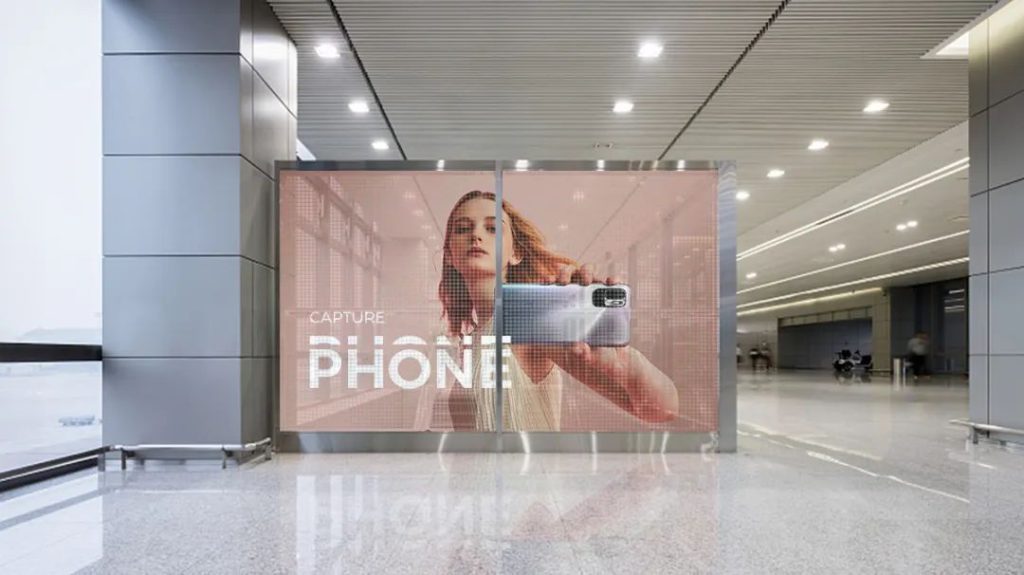
Transparent LED Screen For Airport
A comparative analysis highlights the trade-offs between these technologies:
| අංගය | SMD LED | COB LED | MicroLED (Emerging) | Transparent OLED (Emerging) |
|---|---|---|---|---|
| Pixel Pitch | Fine to Coarse | Finer than SMD, improving | Potentially much finer than COB | Varies, often larger pixel pitch |
| ආකාර | High | High, often better thermal performance | Potentially higher | High contrast, but overall brightness can vary |
| Durability | Good, depends on encapsulation | Improved resistance to dust/impact | High | Can be fragile, depends on mounting |
| Thermal Mgmt. | 1. සම්මත | 2. දේශීය | 3. හැකි අඩු ආනයනවාරිතා | 4. විවිධ |
| 5. බලය භාවිතය | 1. සම්මත | 1. සම්මත | 6. හැකි අඩු | 4. විවිධ |
| 7. ජීවන කාලය | 8. දිගු | 8. දිගු | 9. හැකි දිගු | 8. දිගු |
| 10. වාරිමනා | 11. මධ්යානුපාතික | 12. මධ්යානුපාතික සහ උසස් | 13. උසස් (මේ වනවිට) | 13. උසස් (මේ වනවිට) |
| 14. නිෂ්පාදන | 15. සිදුවී ඇති | 16. සිදුවීමට පත් වී ඇත | 17. අපහසු (ජර්මා මාධ්ය මාරුව) | 18. විශේෂිත |
| 19. ගොඩබිම් භාවිතය | 20. FIDS, ප්රකාශන, ප්රදේශ තීරණය (ගුවන්යානාවේ ඇතුළු/පිටුපස) | 21. දුර්වල ප්රදේශ FIDS, පාලන කේන්ද්ර | 22. ඉහළ තාක්ෂණික කියවන්න, උසස් ප්රකාශන, පාලන කේන්ද්ර | 23. නිර්මාණාත්මක ආර්ථිකය, ප්රකාශන |
24. ප්රදේශයේ ප්රදේශයේ ප්රශ්නයේ අවශ්යතා, නිරීක්ෂණ පාලනය, වාරිමනා සහ පවත්වාගෙන යාමේ නිර්දේශය, මෙම ප්රදේශයේ MicroLED සහ විනෝදීය OLED වැනි අලුත් තාක්ෂ
4. Market Landscape, Key Players, and Procurement Strategies
The global airport LED display market is a significant and growing sector, driven by increasing air travel and the continuous need for airport modernization.
Market Size and Trends
The global airport display screen market was valued at $2.5 billion in 2023 and is projected to reach $5.8 billion by 2032, exhibiting a Compound Annual Growth Rate (CAGR) of 8.6% from 2025 to 2033 [Learning 4, Point 1-3]. The broader LED modular display market, which includes airport applications, shows even stronger growth, with a projected CAGR of 13.7% from 2024 to 2030 [Learning 4, Point 4, 5]. The outdoor LED display segment is also a significant contributor, estimated at US$ 13.78 Bn in 2025 and expected to reach US$ 29.17 Bn by 2032 with a CAGR of 11.3% [Learning 4, Point 6-8].
Key market drivers include:
- Rising Global Air Travel: 1. ගමන්කරුවන් ගණන් වැඩිවීමට තවත් කාර්යක්රීය තොරතුරු සම්ප්රේෂණ තුළින් අවශ්යතා ඇත [ගෞනික 4, ලකුණ 15].
- 2. ගුවන්යානා අඩවි ජාල ප්රතිපත්ති: 3. ලෝක පුරා නවත්වැඩිදියුණු සහ ව්යාප්තනාත්මක ව්යපෘතියන් නව ප්රදර්ශන ස්තාමියන්ට ඉල්ලුම සහතික කරයි [ගෞනික 4, ලකුණ 16].
- 4. ගමන්කරුවන්ගේ උපදෙස් වැඩි කිරීම: 5. ගුවන්යානා ගමන්කරුවන්ට තොරතුරු ආපසු ගැලීම සහ රත්රතු අඩු කිරීම සඳහා ප්රදර්ශන ආයතන අයෝත්රාත්මක කරයි [ගෞනික 4, ලකුණ 17].
- 6. ඩිජල්ල් පරිපාලනය: 7. ගුවන්යානාවේ පුරාතන ඩිජල්ල්කරණයට පැරිණි තත්වයට ඉහලින් ප්රදර්ශන අඩවි ජාලය අනුපත්ති කිරීම [ගෞනික 4, ලකුණ 18].
- 8. සජීවී සම්ප්රේෂණ සමඟ අනුපන්නය: 9. ප්රදර්ශන ආයතන
- Advertising Revenue: The potential for generating revenue through digital advertising is a significant incentive [Learning 4, Point 20].
- Technological Advancements: Improvements in LED technology, including falling prices and increased energy efficiency, make them more attractive than older display types like LCDs [Learning 4, Point 21-25].
A primary market restraint is the high initial investment required for large-scale LED display deployments [Learning 4, Point 26].
Geographically, the Asia-Pacific region currently dominates the LED modular display market, driven by a well-established manufacturing ecosystem and robust supply chain in China [Learning 4, Point 38-40].
Key Players
The market includes a mix of large global electronics companies and specialized LED display manufacturers. Some notable players mentioned in the research include Samsung, Sony Corporation, and SHENZHEN ABSEN OPTOELECTRONIC CO., LTD. [Learning 4, Point 45]. Specialized providers like Daktronics offer integrated LED display solutions specifically for airports 54. Companies like PixelFLEX also offer rental services [Learning 4, Point 46].

9. Helix Ultra-Thin Double-Sided LED Display
Procurement Strategies
Procuring airport LED displays requires a comprehensive approach that goes beyond the initial purchase price. Critical considerations include:
- Total Cost of Ownership (TCO): This includes not only the upfront hardware cost but also installation, energy consumption, maintenance, repair, and eventual disposal costs over the display’s lifespan [Learning 4, Point 26, 32, 33, 40, 41]. Energy-efficient LED displays offer significant TCO advantages over traditional technologies [Learning 4, Point 22, 23, 33].
- Lifecycle Support: Evaluating the vendor’s ability to provide long-term support, including spare parts availability, technical assistance, and software updates, is crucial for ensuring the displays remain operational and effective throughout their service life [Learning 4, Point 40].
- Contractual Terms: Detailed contracts should cover performance guarantees (e.g., uptime SLAs), maintenance responsibilities, warranty periods, and terms for upgrades or replacements [Learning 4, Point 43-48].
- Technical Specifications Alignment: Ensuring the proposed displays meet the specific technical requirements for each application (pixel pitch, brightness, viewing angle, etc.) is paramount [Learning 2, Point 17-22].
- Integration Capabilities: The ability of the displays and their associated CMS to integrate seamlessly with existing airport systems (AODB, security, building management) is a key factor [Learning 2, Point 6, 7, 10, 12, 14, 15, 16, 21, 22].
- 1. ව්යාපාරවලත් ප්රමාණය හා ස්වයංක්රමානාත්යත්වය: 2. අධිකාරී ගතිකාරක වැනියාගත් පහසුවෙන් වැඩිදියුණු වීම හෝ නවකාලීන අවශ්යතාවන්වලට අනුකරණය වන සම්බන්ධතාවන් තෝරාගැනීම ගතිකාරක වැනියාගත් ප්රදේශයේ වැදගත්ය.
3. මෙම සංවර්ධනයන් සලකාගත් විශාල අපනයන ක්රියාවලියක් වැනියාගත් ප්රදේශයේ ප්රදර්ශන සම්බන්ධතාවන් තෝරාගැනීමට ආධාර වේ, එය දිගුකාලීන වන්දි, අවශ්යතාව සහ ව්යාපාරවලත් සුක්රියාවක් සපයයි.
4. 5. ව්යාපාරවලත් පාලනය, ස්වභාවිකත්වය හා පාලානාත්යය
5. ගතිකාරක ප්රදේශයේ LED ප්රදර්ශනයන්ගේ උපකාරී බව හා දිගු කාලීන වන්දි ලබාදීම සහ මුල්යයන්ගේ ප්රතික්රියාවට සහාය වන ප්රභේදයන්ගේ ප්රමා
Ensuring High Reliability and Uptime
Airport environments present unique challenges for electronic equipment, including dust, temperature fluctuations, and electromagnetic interference [Learning 4, Point 34][Learning 5, Point 1]. Displays must be built to withstand these conditions and operate reliably 24/7 8. Key factors for reliability include:
- Robust Hardware: Using commercial-grade displays designed for continuous operation with durable components and effective thermal control 822.
- Stable Power Supply: Ensuring a stable power supply voltage is crucial to prevent flickering or instability 21. Installing surge protectors can mitigate damage from voltage fluctuations 25.
- Proper Installation: Correct installation, including secure wiring and appropriate mounting options, is vital for long-term reliability 21.
- Environmental Control: Maintaining appropriate temperature and humidity levels can prevent corrosion and short circuits 22.
Maintenance Models
Airports employ various maintenance models to ensure display functionality:
- Preventive Maintenance: Regularly scheduled inspections, cleaning, and software updates to identify and address potential issues before they cause failures 1623. This is crucial for maintaining optimal performance and extending lifespan 16.
- Reactive Maintenance: Addressing failures as they occur. While necessary for unexpected issues, relying solely on reactive maintenance is inefficient and can lead to significant downtime 17.
- Predictive Maintenance: Utilizing data and analytics to anticipate potential failures and schedule maintenance proactively 1731. This is increasingly enabled by AI and sensor technology 17.
Remote Monitoring and Management
Remote monitoring systems are becoming standard for airport displays, allowing maintenance staff to:
- Oversee display status (content, brightness, temperature) from a central location 14.
- 1. අනාගත අනතුරු හඳුනාගත් විට ස්වයංක්රීය අනුකරණාදායක අනුබෝවීමය 14.
- 2. දුර්වලින් දේශීය අධ්යක්රණ, මාර්ගගත අනුප්රවාදන, හැකියාවන් සීමා කර, අන්තර්ජාතික ස්ථානයන්ට පැමිණීමට අවශ්යතාව අඩු කරයි 14.
- 3. ප්රමුඛ ප්රයෝජනයක් ලෙස, ප්රවාහන ප්රවේදාත්මකව, ජාල සම්බන්ධතා, සහ පාලක තත්වය පරීක්ෂා කිරීමෙන් පැනවීම් ප්රකාශයට පත් කරයි 27.
4. AI මත පැවැත්වෙන අනාගත පාලානය විසින්, සංවිධාන අත්කරණයක් ලෙස, සංවිධානයේ අනාගත අතුරුකිරීමට සහභාගි වන ප්රවේදාත්මකව, අනාගත අතුරුකිරීමට සහභාගි වන ප්රවේදාත්මකව, අනාගත අතුරුකිරීමට සහභාගි වන ප්රවේදාත්මකව, අනාගත අතුරුකිරීමට සහභාගි වන ප්රවේදාත්මකව, අනාගත අතුරුකිර 1731. These systems can track parameters like thermal expansion and surface temperature 17.
Common Failure Modes and Troubleshooting
Common issues with LED displays include black screens (often due to power or control card issues), abnormal display color (damaged LED beads), flickering (unstable power), and partial blackouts (power supply or module issues) 2127. Troubleshooting typically involves checking power, data connections, and controller status 27. Detailed maintenance records and a stock of spare parts are essential for efficient repair 18.
Power Consumption and Heat Dissipation
LED displays are significantly more energy-efficient than older technologies like LCDs, contributing to lower operating costs and a reduced environmental impact 33. However, large LED walls still consume substantial power and generate heat. Effective heat dissipation through design and potentially external cooling systems is necessary to maintain performance and lifespan 8. Power over Ethernet (PoE) is also being used to power smaller displays and associated network components, simplifying installation and reducing cabling 66.
Environmental Resilience
Displays installed in outdoor or semi-outdoor areas must be resilient to environmental factors. This includes appropriate IP ratings for protection against dust and moisture, as well as operating temperature ranges that can handle airport climates 22. Regular cleaning is also necessary to prevent dust accumulation from affecting viewing quality 18.
Service Level Agreements (SLAs)
SLAs are crucial in the airport context, defining the expected level of service for display systems, particularly FIDS. These agreements between airports and airlines typically cover uptime, response times for maintenance, and data accuracy 36. SLAs help ensure consistent service levels and can include penalties if standards are not met 36. Joint periodic reviews of SLAs are recommended to adapt to changing operational needs 36.
Effective operational management and a proactive, data-driven maintenance approach are critical for maximizing the value and reliability of airport LED display investments.
6. Content Management Systems and AI Integration
Advanced Content Management Systems (CMS) are the backbone of airport digital signage networks, enabling the efficient delivery of diverse and dynamic content across numerous displays. The integration of Artificial Intelligence (AI) is further enhancing the capabilities of these systems, moving towards more personalized, responsive, and optimized content delivery.
Functionalities of Advanced CMS
CMS platforms tailored for airport environments offer a range of functionalities:
- Scheduling and Zoning: Allowing administrators to schedule specific content to play at designated times and on particular zones or individual displays 41.
- Real-time Data Integration: Crucially, integrating with airport operational databases (AODB) and other systems (weather, traffic, news feeds) to display real-time information like flight updates, gate changes, and emergency alerts automatically 41.
- Content Creation and Management: Tools for creating, uploading, organizing, and managing various content formats (images, videos, text, interactive elements) 41.
- 6. ගොඩබිම් ආධාරය: 1. ජාතික ගුවන්යානා සඳහා බොහෝ භාෂාවන්හි තොරතුරු ප්රදර්ශනය කිරීම සිදුවිය යුතුය 19.
- 2. දේශීය ප්රධාන්ත්රීය මණ්ඩලවලින් 3. මධ්යස්ථානයේ සිට ප්රදර්ශන සහතිකතාවන් ප්රතිපත්තියන් හා නැවත නවතැම්පත් කිරීම 14.
- 4. භාවිතකරු තත්වයේ මණ්ඩලවලින් 5. නොයෙක් ගුවන්යානා සේවකයන්ට විවිධාකාර ප්රවේශයන් නිර්ණය කිරීම 43.
- 6. බාහිර යෙදුම් සමඟ සමන්විතතාව 7. අතිරේක ක්රියාකාරීත්වය හා දත්ත වෙබ් හුවමාරු සඳහා තුන්දෙනා පද්ධති සහ ඒජීරියස් සමඟ සමත් 43.
8. CMS තුල AI අන්තර්ජාතිකය
9. AI, ගුවන්යානා ඩිගික්රීන් නිර්මාණය කරනවා, වඩා බුද්ධිමත් හා ගණන්ගත වූ සැමවිට ප්රදර්ශන සහතිකතාවන් සපයයි:
- 10. ගණන්ගත වූ සැමවිට ප්රදර්ශන සහතිකතාවන AI, particularly generative AI and machine learning, can be used to create new content based on predefined parameters or real-time data 44.
- Audience Analytics: AI-powered systems can analyze audience demographics (e.g., age, gender) and behavior (e.g., dwell time, viewing patterns) using sensors or facial recognition technology (with privacy considerations) 44. This data provides valuable insights into content effectiveness and audience engagement.
- Context-Aware Signage: AI allows displays to become context-aware, triggering specific content based on environmental factors (weather, time of day), operational status (delays, gate changes), or audience attributes 44.
- Personalized Content Delivery: Based on audience analytics and integration with passenger data (e.g., through airport apps or loyalty programs), AI can deliver personalized content, such as targeted advertising or specific information for frequent flyers 41.
- System Optimization: AI can optimize content scheduling and delivery based on predicted passenger flow, peak times, and audience behavior to maximize impact and efficiency.
- Predictive Maintenance Integration: While primarily an operational function, AI in CMS can potentially integrate with predictive maintenance systems to display alerts or status updates about display health 1731.
AI integration moves airport digital signage from a static or simply scheduled system to a dynamic, responsive, and personalized communication platform. This enhances the passenger experience, improves operational efficiency, and increases the potential for advertising revenue 41. However, the implementation of AI, particularly involving passenger data or facial recognition, requires careful consideration of privacy regulations and ethical implications.
7. Future Trends and Technological Innovations
The future of airport display technology is characterized by continued technological advancements, deeper integration with other airport systems, and a focus on creating more immersive and personalized passenger experiences.
Emerging Display Technologies
- MicroLED Advancements: As manufacturing challenges are overcome, MicroLED is expected to become more cost-effective and widely adopted, enabling ultra-high-resolution displays for critical applications like control centers and premium advertising spaces [Learning 3, Point 7-11].
- Transparent and Flexible Displays: 1. පාර්ශවීය OLED සහ නම්යානයික LED තාක්ෂණයේ අතින් සමහරවා සොදුන්වාමින් දැඩි සහ සම්බන්ධක ප්රදර්ශන මෝස්තර් නිර්මාණයක් සිදු වනු ඇත, පිරිසිද්ධිය සහ වාර්තා අනුවේගීව ගොඩනැගීම 5557522. . එයට පතුරු ප්රදර්ශක, තිරයේ සිටින තිරය හෝ වැන්දඹුන් හෝ 360-තම්යානයේ ප්රදර්ශන අත්යාවශීලි වැදගත් දෘශ්යමය අත්යාවශීලියක් නිර්මාණය කරන ප්රදර්ශක අඩංගු වේ 54.
- 3. 3D අන්තර්ගතය (සිදුකරන ලද ප්රශ්නය): 4. 3D අන්තර්ගතයේ භාවිතය, විශේෂයෙන්ම ලක්ෂ්යයන්හිදී අතිරේකව වූ ප්රභව්යන් හෝ අනෙකුත් අනුපාතික ව්යුහකරණ වශයෙන්, වැදගත් සහ මුල්යාභාවික දෘශ්යමය නිර්මාණයක් නිර්මාණය සිදු වේ 54.
5. AI තීරණාත්මක හැකියාවන්
6. AI, පාර්තිකාරී ප්රද
- Predictive Maintenance: AI-powered systems will become more sophisticated in predicting display failures, optimizing maintenance schedules, and minimizing downtime 1731.
- Personalized Content at Scale: AI will enable highly personalized content delivery to individual passengers based on real-time data, preferences, and location, enhancing targeted advertising and providing relevant information 4169.
- Dynamic Pricing for Advertising: AI could potentially enable dynamic pricing for advertising slots based on predicted audience demographics and foot traffic.
- AI-Powered Wayfinding: Integration with AI assistants and natural language processing could provide more interactive and intuitive wayfinding experiences 42.
Integration with IoT Platforms
The Internet of Things (IoT) will further enhance the capabilities of airport displays. Displays can become connected nodes in a larger IoT ecosystem, receiving data from various sensors (e.g., crowd density, environmental conditions) and triggering content changes accordingly 67. This allows for more responsive and adaptive information dissemination.
Evolving Design Form Factors
Beyond traditional rectangular screens, future airport displays will likely feature more diverse and creative form factors, integrated into the physical structure of the airport. This includes large-scale experiential displays, displays on columns and ceilings, and potentially even displays embedded in flooring or furniture 54. The focus will be on creating visually engaging and informative environments that enhance the passenger journey 54.
Connectivity and Infrastructure
- 5G Implementation: The rollout of 5G networks within airports will provide the high bandwidth and low latency required for real-time data transfer, supporting more dynamic content, seamless integration with mobile devices, and enhanced security applications like high-definition video surveillance 6365.
- Wireless Power Transfer: While still emerging, wireless power transfer technology could potentially simplify the installation and power management of some smaller displays or associated sensors 73.
Integration with Other Airport Systems
Future displays will be even more tightly integrated with a wide range of airport systems, including security, building management, retail analytics, and baggage handling 6871. This interconnectedness will enable a more unified and intelligent operational environment.
Challenges
Despite the exciting potential, challenges remain. These include the high cost of implementing cutting-edge technologies like MicroLED, ensuring interoperability between systems from different vendors, managing the immense volume of data generated, and addressing potential security vulnerabilities in interconnected systems 68. For 5G, concerns about potential interference with aircraft systems need to be fully addressed 76.
1. อนาคตของจอแสง LED ในสนามบินนั้นมุ่งหน้าสู่ภาพที่มีการสมการระดับสูง, สมองส่วนตัว, และมีการแสดงภาพที่เปลี่ยนแปลงอย่างฟิจิงกันที่จะมีบทบาทสำคัญในการจัดรูปแบบประสบการณ์ของผู้โดยสารและปรับปรุงการปฏิบัติงานของสนามบิน
2. 8. สรุป
3. ระบบจอแสง LED ได้พัฒนาจากเครื่องมือสมทบเพิ่มเติมเป็นส่วนที่จำเป็นของโครงสร้างสนามบินสมัยใหม่. การใช้งานที่หลากหลายของมัน จากระบบแสดงข้อมูลการบินที่สำคัญอย่างยิ่ง จนถึงการโฆษณาที่มีการแสดงทันทีและการหนาวเนื่องที่สมเพลิง บ่งชี้ความสำคัญของมันในการปรับปรุงประสิทธิภาพการปฏิบัติงาน การปรับปรุงการไหลของผู้โดยสาร และทำให้สร้างสภาพแวดล้อมที่มีความเข้าใจกันดีขึ้น
4. ความสามารถทางเทคนิคของจอแสง LED ที่มีตัวเลขเช่นระยะจุดพิกเซล, สว่าง, และอัตราการปรับปรุง กำลังพัฒนาอย่างต่อเนื่อง โดยเทคโนโลยีที่กำลังเข้ามาแทนที่เช่น MicroLED และจอแสงที่สามารถเห็นได้คลื่นไฟฟ้าด้วยความสามารถที่สูงขึ้นและทำให้มีความเป็นไปได้ทางการออกแบบที่มีความสมบูรณ์มากขึ้น. ตลาดของจอแสงนี้กำลังประสบการณ์การเติบโตอย่างมาก โดยมีการเดินทางทางอากาศที่เพิ่มขึ้นและความพยายามที่มีต่อการปรับปรุงสนามบินที่สมัยใหม่ แม้ว่าการลงทุนเริ่มต้นที่สูงเป็นปัญหาหลักในยุทธศาสตร์การซื้อที่ต้องใช้จำนวนเงินทั้งหมดและการสนับสนุนชีวิตทางยาวนาน
Effective operational management, including robust maintenance strategies and the increasing adoption of remote monitoring and predictive maintenance powered by AI, is crucial for ensuring the high reliability and uptime required in a 24/7 airport environment. Furthermore, advanced Content Management Systems, increasingly integrated with AI, are enabling more dynamic, context-aware, and personalized content delivery, transforming displays into intelligent communication platforms.
Looking ahead, the future of airport display technology is intertwined with broader trends in airport digitalization, including the rollout of 5G, the integration of IoT, and the development of smart airport ecosystems. Future displays will likely feature more innovative form factors and deeper integration with other airport systems, contributing to a more seamless, efficient, and personalized passenger journey. While challenges related to cost, integration, and data management persist, the trajectory of technological innovation suggests that LED displays will continue to play a central and increasingly sophisticated role in the airports of tomorrow.
References
- sryleddisplay.com
- ledscreenfactory.com
- szdlsdisplay.com
- bibiled.com
- szledworld.com
- scribd.com
- indracompany.com
- site.com
- mvix.com
- unique.net.in
- coherentmarketinsights.com
- gminsights.com
- dataintelo.com
- bibiled.com
- bibiled.com
- aviationpros.com
- szradiant.com
- mile-strong.com
- sixteen-nine.net
- hpwinner.com
- bibiled.com
- onedisplaygroup.com
- aviationpros.com
- nseledcloud.com
- voltacompliance.com
- enbon.net
- colorlitled.com
- vision-pi.net
- malms.aero
- gmrgems.com
- alstefgroup.com
- voltainsite.com
- ledvstar.com
- ledscreenfactory.com
- nanolumens.com
- iata.org
- splunk.com
- dubailedscreen.com
- vision-pi.net
- ledsignsupply.com
- signagespace.com
- 22miles.com
- ryarc.com
- risevision.com
- onesign.pk
- airport-suppliers.com
- a-ice.aero
- nexusintegra.io
- ledvstar.com
- linsnled.com
- zodiac.com.vn
- ddw.net
- bibiled.com
- daktronics.com
- display-innovations.com
- oled-info.com
- crystal-display.com
- newtechstore.eu
- airport-information-systems.com
- tavtechnologies.aero
- airport-information-systems.com
- scirp.org
- researchgate.net
- akamaized.net
- verizon.com
- omnitron-systems.com
- swiftsensors.com
- mitre.org
- futuretravelexperience.com
- viewpointec.com
- inditechconnects.com
- egoal.live
- powercastco.com
- airportanalytics.aero
- radianttech.net
- aviationtoday.com
- airportprojects.net